November 5, 2026 · By MooveTrax
LAX Lockbox Ban: Turo's New Key Rules for Hosts, Explained
If you deliver cars to Los Angeles International Airport, the way you hand off keys is changing -- on a specific date, with specific penalties. There are actually two separate rules in Turo's published LAX policy, and hosts keep conflating them. Here is exactly what the policy says, what it costs to get it wrong, and every compliant option you have.
What the policy actually says
Turo's official LAX host page states: "Beginning Nov. 15, 2026, Turo will prohibit the use of external lockboxes that can be seen from outside the vehicle, such as window lockboxes, at LAX." That's rule one -- a ban on visible lockboxes airport-wide. The same page notes that "permitted lockboxes include license plate lockboxes, tow hitch lockboxes, and lockboxes that attach below the vehicle bumper." So a lockbox that can't be seen from outside the car remains allowed at LAX generally.
Rule two is stricter and already in effect. At the LAX Budget Lot -- the primary permitted delivery location -- Turo's policy says lockboxes can no longer be used at all: "The LAX Budget Lot does not allow lockboxes. Hosts operating at this location must use manufacturer remote-unlock technology instead." No window boxes, no license plate boxes, nothing. If you drop cars at the Budget Lot, remote unlock is now the requirement, not a nice-to-have.
One caveat on sourcing: these rules appear in Turo's help documentation, which governs hosts operating under Turo's delivery permit with the airport. We could not find a separate public announcement from Los Angeles World Airports itself, so the dates and details above come from Turo's policy pages as of November 2026.
Where this applies -- and where you can even do handoffs
LAX doesn't allow peer-to-peer handoffs just anywhere. Curbside pickup or drop-off anywhere on airport property is prohibited, and Turo warns that "license plate reader technology will record any drop-off or pickup at an unapproved airport location." The permitted locations are:
- LAX Budget Parking (5455 West 111th Street) -- the main lot, reachable by the Budget Lot shuttle. This is where the total lockbox ban applies.
- Park My Share at The Parking Spot -- requires enrolling in the Park My Share program.
- Airport Gate Parking (5430 W. Century Blvd) -- attendants on site 24/7; you hand your keys to the attendant, and your guest retrieves them. $4 for the first hour, $24 daily maximum.
- Sunrise Parking Lot (6155 West 98th Street) -- also attended; the attendant parks the vehicle and holds the keys. (Ford Transit and Mercedes Sprinter vans aren't eligible here.)
Enforcement and penalties
This isn't an honor system. Turo's policy states that "lockbox and key security will be monitored by airport, law enforcement, and parking personnel, who will notify Turo and provide evidence of offenders." Hosts who leave keys unsecured or use visible lockboxes can lose delivery privileges at LAX. Location violations carry a $200 airport fine for the first and second offenses; a third brings another $200 fine plus permanent suspension from delivering to LAX. Fines are deducted directly from host earnings, and Turo layers its own airport permit violation fee on top.
Key placement matters for insurance too: Turo says keys left under windshield wipers, in wheel wells, or in the cupholder of an unlocked car "put your vehicle at serious risk and can void your protection plan."
Your compliant options
There are four ways to stay compliant at LAX, and the right one depends on your cars and your workflow.
1. In-person or attendant handoff. Meet the guest at a permitted lot, or use Airport Gate Parking or Sunrise Parking, where attendants hold keys as part of the service. Zero technology required; the tradeoff is your time or the lot fees.
2. A non-visible lockbox -- outside the Budget Lot. License plate, tow hitch, and under-bumper lockboxes remain permitted at LAX after November 15. They are not allowed at the Budget Lot, and Turo's general guidance still requires changing the combination every trip and confirming guest identity before sharing codes.
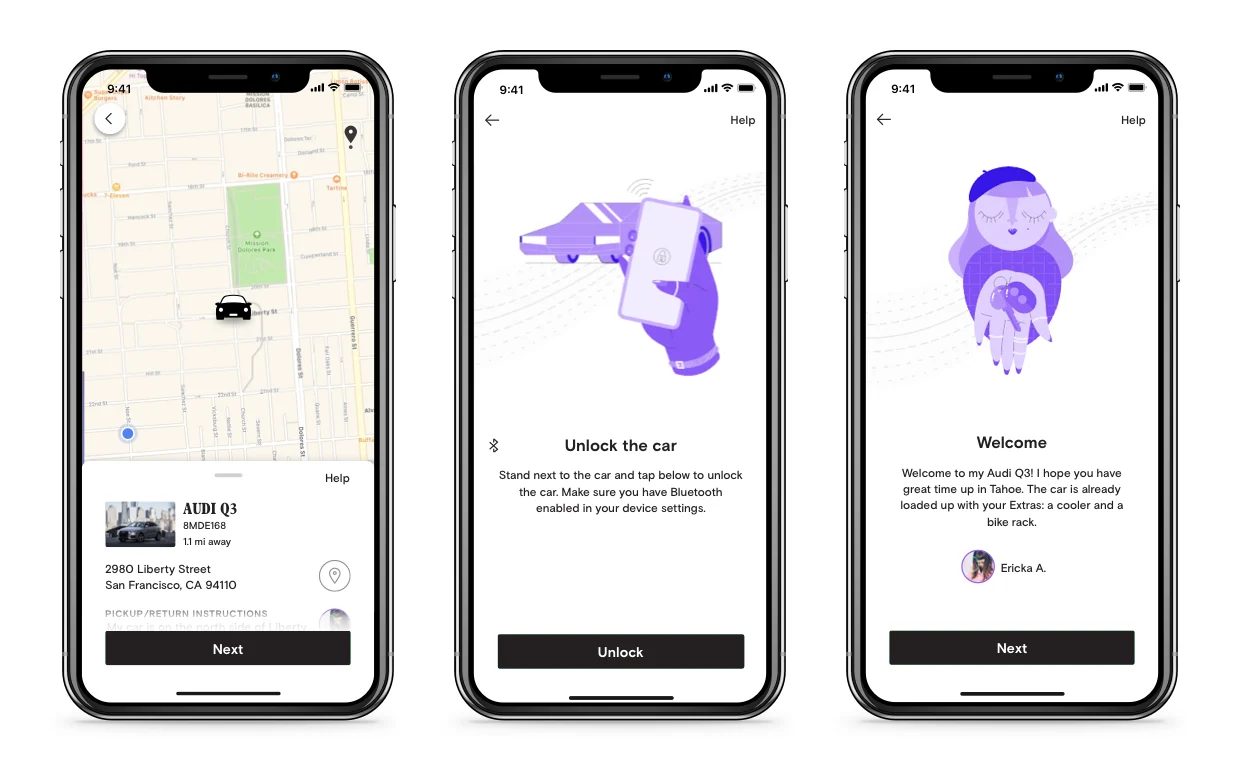
3. Your car's factory app. If your vehicle supports manufacturer remote access, Turo encourages using it. Their documentation lists the Tesla app, FordPass, myHyundai, Kia Connect, Toyota, HondaLink, MyMazda, My BMW, myChevrolet, and Mercedes-Benz apps among those that may support remote unlock. One requirement surprises people: even with remote unlock, "Turo requires hosts to provide guests a physical key" -- hidden inside the vehicle in a radio-frequency blocking pouch so the car stays locked until the verified guest opens it.
4. An aftermarket remote-unlock device. If your car has no factory app, retrofit telematics hardware adds remote lock/unlock to almost any vehicle, which satisfies the Budget Lot's remote-access requirement the same way an OEM app does.
Where MooveTrax fits
MooveTrax covers options three and four. If your car already has a compatible factory app -- Tesla or another OEM -- you can link it at moovetrax.com/oem with no hardware install ($10/month) and manage guest access, GPS tracking, and trip alerts from one dashboard. For cars without factory connectivity, the MT3V device ($165 hardware, $15/month) adds remote lock/unlock, renter-initiated unlock, a kill switch, and Bluetooth unlock that works when cellular signal is weak -- useful in parking structures. It's one of several compliant paths, not the only one; hosts doing attendant handoffs or using hidden hitch boxes outside the Budget Lot are equally within the rules.
What to do before November 15
If you run window lockboxes at LAX, retire them now -- enforcement personnel are specifically watching for them. Decide whether your fleet moves to a hidden lockbox style, an attended lot, a factory app, or retrofit hardware, and test the full guest flow once before a real trip. The $200-per-violation math makes a dry run cheap by comparison.