Tracking · September 30, 2026
Ride.auto vs Turo: What Changes for Fleet Operators (and What Doesn't)
If you're running a fleet -- not a single side-hustle car -- you've probably had Ride.auto come up as an option alongside Turo. The two platforms sound similar from a distance. Up close, the economics and the onboarding process are genuinely different. What isn't different: the tracking, security, and insurance-compliance setup underneath either one.
Ride.auto only lets in professional operators
Turo's marketplace is open to almost anyone with a car and a clean driving record -- a single host with one car is treated the same as an operator running forty. Ride.auto works differently. Every vehicle has to go through Wheelbase, Ride's fleet management partner, before it's even eligible to list. That's not a formality -- it's a filter. Ride's own positioning is blunt about it: every car on the platform comes from "a vetted, professionally-run business -- not a side hustle."
If you're a solo host with one or two cars, that gate probably rules Ride.auto out for now. If you're already running a fleet with real operational structure, it's worth a look -- Ride's pitch is that it shares more of the revenue with the car owner than the alternatives.
The insurance track is different too: Roamly, not just Turo's own coverage
Ride.auto's insurance relationship runs through Roamly. That matters for anyone who's spent time getting a Turo listing compliant with Tint or ABI insurance requirements -- Roamly isn't the same program, and it's worth confirming your tracking setup is actually approved for it before you assume it carries over.
MooveTrax is already an approved telematics provider for Roamly, alongside Tint Off-Trip Insurance and ABI Insurance. If you're moving a fleet onto Ride.auto, or running it alongside Turo, the same MooveTrax setup covers both insurance tracks without switching hardware or providers.
What doesn't change: you still need real tracking and a real kill switch
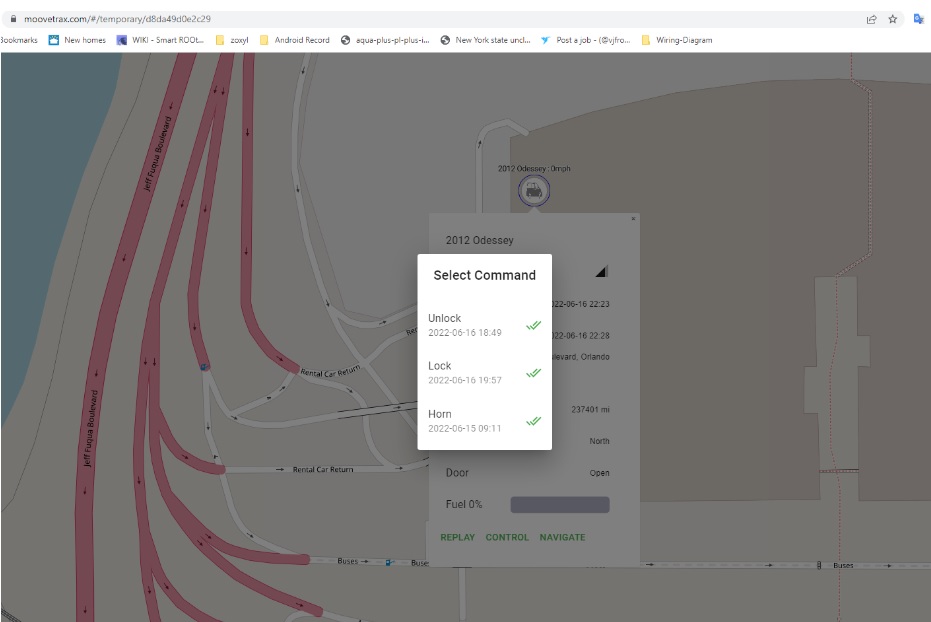
Neither platform's marketing talks much about GPS tracking or remote immobilization -- that's operational infrastructure, not something either marketplace sells you. But running a fleet without it is the same risk regardless of which platform sent the booking: no way to see where a car actually is, no way to shut it down remotely if something goes wrong, and no audit trail if a renter disputes what happened during a trip.
- Live GPS tracking, not just a last-known location, so you can see a car in motion
- A real kill switch you can trigger remotely, not just a lock/unlock toggle
- An audit log of every command and event, for disputes and insurance documentation
- Fleet-scale account management -- unlimited sub-accounts if you have staff managing different vehicles
This is the layer that doesn't care which marketplace is sending you traffic. A car tracked and secured with MooveTrax works the same way whether the booking came from Ride.auto, Turo, or your own direct rentals.
The practical takeaway
If you're deciding between Ride.auto and Turo -- or running both -- the platform choice comes down to your operation's size and how you feel about Wheelbase's onboarding gate and Ride's revenue split. The tracking and security setup is a separate decision, and it's one you only have to make once. Get that right and it travels with you regardless of which marketplace you list on next.
See how MooveTrax works for professional fleet operators, including Roamly-compatible tracking built in.
MooveTrax for Ride.auto Fleets Compare Pricing