November 5, 2026 · By MooveTrax
From The Club to the Kill Switch: The Real Evolution of Car Theft Prevention
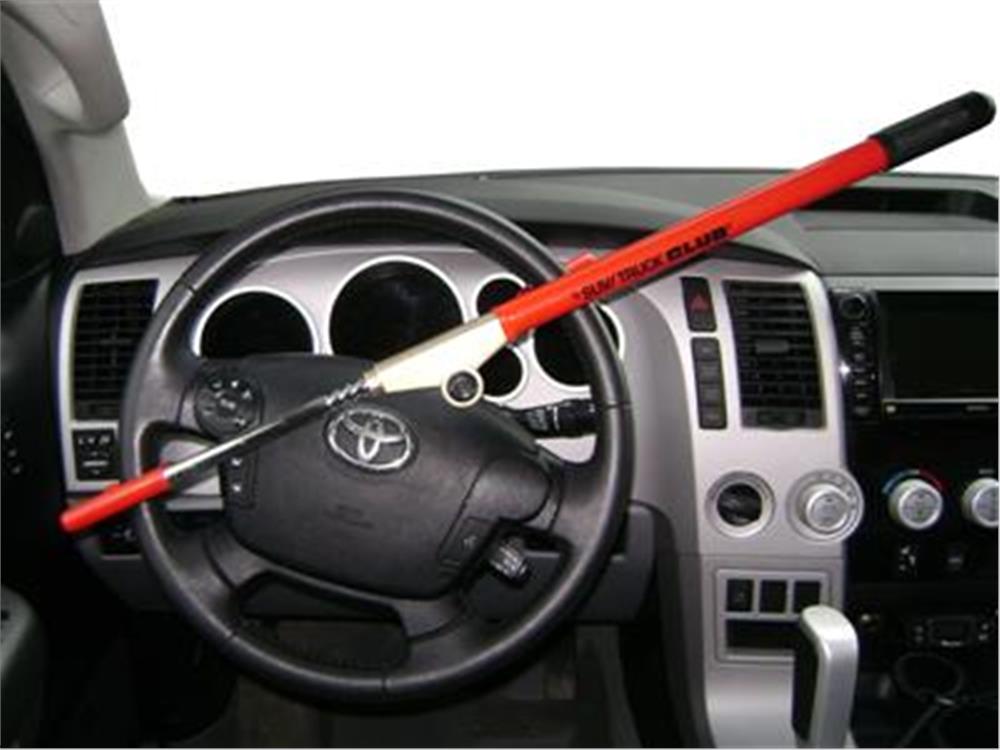
If you parked a car in an American city in 1993, odds are you owned The Club. The red steel bar locked across your steering wheel was equal parts practical and ridiculous -- a visible dare to thieves that worked mostly by convincing them to steal the car next to yours. Determined thieves simply cut the steering wheel itself in seconds and slid the bar off. The Club didn't stop theft; it redirected it.
Thirty years later, the numbers tell a very different story. After peaking at 1,020,729 stolen vehicles in 2023, U.S. auto theft has collapsed -- down roughly 35% by the end of 2025 according to the National Insurance Crime Bureau, with another 21% drop in the first half of 2026. That decline didn't happen because of steel bars. It happened because theft prevention evolved through four distinct generations -- each one solving the last generation's weakness, and each one eventually developing a weakness of its own.
Generation one: the alarm that cried wolf
Car alarms promised what The Club couldn't: protection even when nobody was watching. The problem is they never actually delivered. In 1997, the insurance industry's Highway Loss Data Institute analyzed claims data from 73 million vehicles and concluded that cars with alarms showed no overall reduction in theft losses compared to cars without them. The reason was simple: an estimated 95-99% of alarm activations are false, so bystanders learned to ignore them entirely -- the "boy who cried wolf" effect, in HLDI's own words. A practiced thief could clip the siren's wires in seconds anyway. Alarms made noise. They didn't make cars harder to steal.
Generation two: the immobilizer actually worked -- until it didn't
The first genuine breakthrough was the electronic engine immobilizer: a transponder chip in the key that the engine computer must authenticate before the car will start. No chip, no ignition -- hot-wiring became physically impossible. The European Union made immobilizers mandatory on all new cars in October 1998, and the results were dramatic: researchers estimated theft rates fell roughly 70% in the Netherlands and about 80% in England and Wales as immobilized cars replaced older ones. The U.S. never mandated them, but they became near-universal on new vehicles through the 2000s -- and American theft rates fell for two decades.
Then came the exception that proved the rule. Kia and Hyundai sold roughly nine million 2011-2022 vehicles in the U.S. with steel keys and no immobilizer at all -- a cost-cutting decision that stayed invisible until 2021, when the viral "Kia Challenge" showed teenagers starting these cars with a USB cable. Thefts of affected models exploded, driving a meaningful share of the national 2023 theft spike. The companies began rolling out a free anti-theft software patch in February 2023, and where it's installed, it works: HLDI measured a 53% drop in theft claims and a 64% drop in whole-vehicle thefts on updated cars. But the rollout remains incomplete years later -- a December 2025 New York attorney general settlement found the hardware fix for patch-ineligible vehicles had reached only about 20% of them, and California's 2025 settlement alleged the software fix itself was being bypassed by thieves. Hundreds of thousands of vulnerable cars are still on the road today.
Generation three: if you can't prevent it, recover it
LoJack, launched in 1986, flipped the problem around. Instead of stopping the theft, a hidden radio transceiver let police track the stolen car -- often leading them straight to chop shops. It worked well enough that LoJack became a verb, but it had limits: it did nothing to prevent the theft itself, coverage depended on police radio infrastructure, and the economics eventually failed. LoJack wound down U.S. sales in 2021 and shut off its legacy radio network entirely in March 2026. Its cheaper successors -- plug-in OBD-port GPS trackers -- inherited the same core weakness plus a new one: a thief who finds the dongle can unplug it in two seconds.
Generation four: thieves go digital
Meanwhile, factory security itself got hacked. Keyless entry introduced the relay attack: two thieves with radio equipment capture your fob's signal through your front door, beam it to the car, and drive away -- no forced entry, no alarm. When carmakers countered with motion-sensing fobs, thieves moved to CAN-bus injection: prying off a headlight or fender trim to reach the car's internal data network and injecting a fake "valid key present" message. Automotive security researcher Ken Tindell famously documented thieves stealing a Toyota RAV4 this way in under two minutes -- through the headlight wiring. The lesson of forty years repeated itself: any defense that lives entirely inside the car, keyed to a token the thief can spoof or a wire the thief can reach, eventually gets beaten.
Generation five: the key becomes your phone
That's the design problem MooveTrax set out to solve -- by moving the authentication off the car and onto the one device thieves can't relay, clone, or unplug from your fender: your phone.
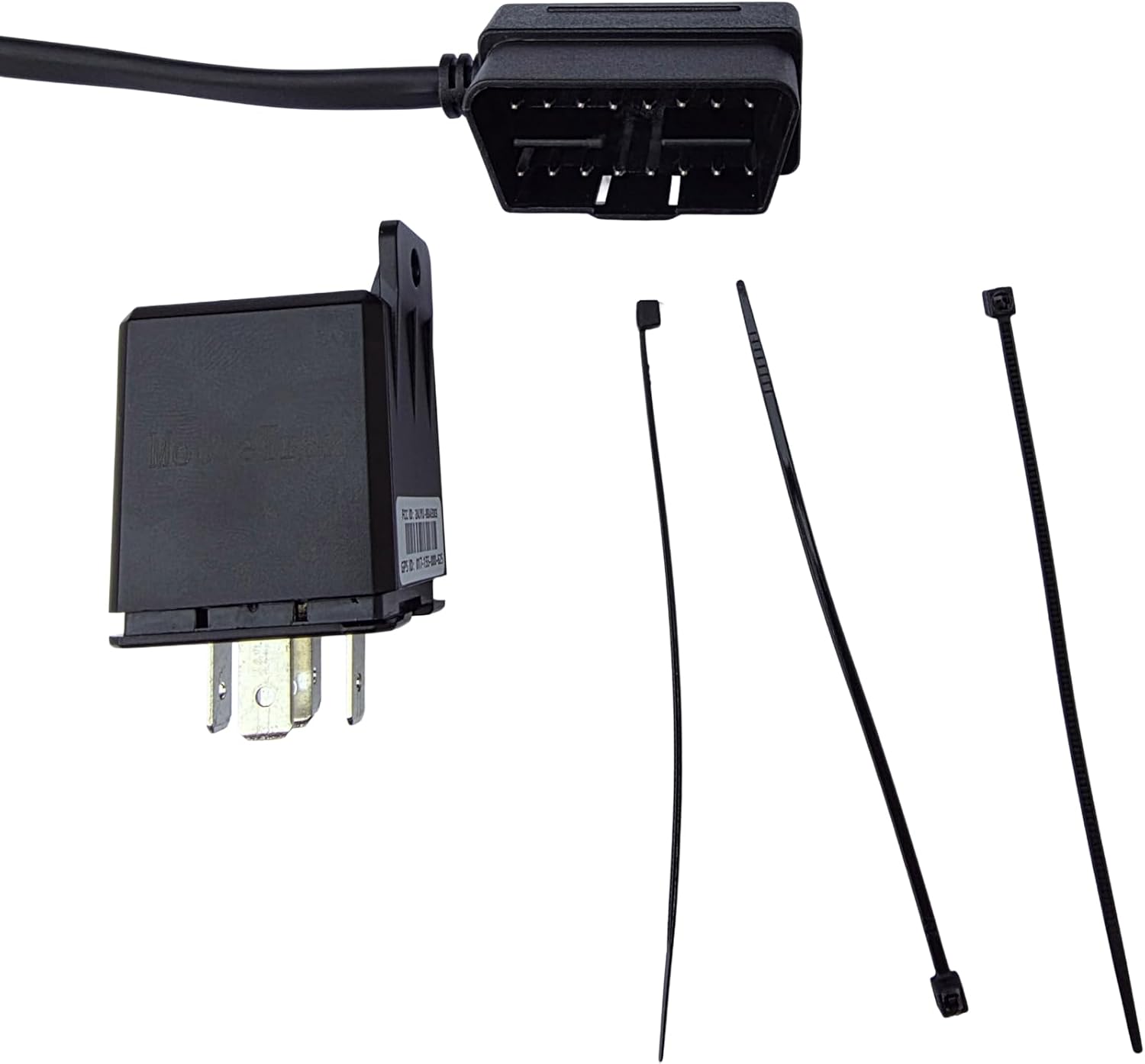
A MooveTrax device hardwires a GPS tracker and ignition kill switch into the vehicle, paired to your phone over Bluetooth and the cellular network. Walk away, and the car can automatically lock and disable its starter. Someone defeats the door lock, spoofs the CAN bus, or even has the physical key? The engine still won't start, because the authorization isn't in the car -- it's in your pocket. From the app you can lock, unlock, trigger horn and lights, and kill or restore the ignition from anywhere; a Bluetooth PIN backup works even in parking garages with no cell signal. The same hardware adds the recovery layer LoJack pioneered -- live GPS tracking, geofence alerts, towing and hood-open detection -- which is why it's become standard equipment for Turo hosts and small rental fleets, with hardware starting around $40 plus a monthly subscription.
The Club deterred. Alarms annoyed. Immobilizers worked until thieves went around them. Trackers found cars after they were gone. The fifth generation finally combines all of it -- prevention, control, and recovery -- in one layer thieves can't reach from inside the car. The evolution isn't over. But for the first time, the defenders are ahead.