November 1, 2026 · By MooveTrax
How to Add Live Vehicle Location and Remote Commands to Your App: A Developer's Guide
If you're building anything on top of vehicles -- a fleet dashboard, a car-sharing side business, an insurance verification tool -- you eventually need two things: live location data flowing into your code, and the ability to send commands (lock, unlock, immobilize) back out. There are four realistic ways to get there, and they have genuinely different costs and constraints. Here's an honest comparison, followed by a complete working example.
Four integration routes, compared
1. Smartcar (OEM aggregator). Smartcar sits on top of the connected-car systems carmakers already ship, so there's no hardware to install -- the owner authorizes your app against their manufacturer account. The free plan covers a single connected vehicle (plus three simulated ones for testing); the Build plan starts around $1.99 per vehicle per month up to 500 vehicles. The tradeoff: you only get the signals each OEM exposes, data freshness depends on the manufacturer's cloud, and older vehicles without factory connectivity are simply out of reach.
2. Direct OEM APIs (Tesla Fleet API and friends). Going straight to the manufacturer gets you the deepest integration -- Tesla's Fleet API supports streaming telemetry and real commands. But since January 1, 2025 it's pay-per-use: Tesla grants each developer account a $10 monthly credit, after which commands, data pulls, and especially wake-ups (20 credits each) are metered. Streaming telemetry is dramatically cheaper than polling, so architecture matters. And obviously, it only works for Teslas. Other OEM programs exist but typically involve enterprise agreements.
3. Bouncie (OBD-II device + API). Bouncie sells a plug-in OBD-II tracker with a REST API and webhooks. The API itself is free, but it's gated behind owning Bouncie hardware with an active subscription (around $9/device/month, plus the device cost). It's a solid consumer option if you're tracking your own cars, but per-device subscription costs compound across a fleet, and the OBD-II form factor is easy for a renter to unplug.
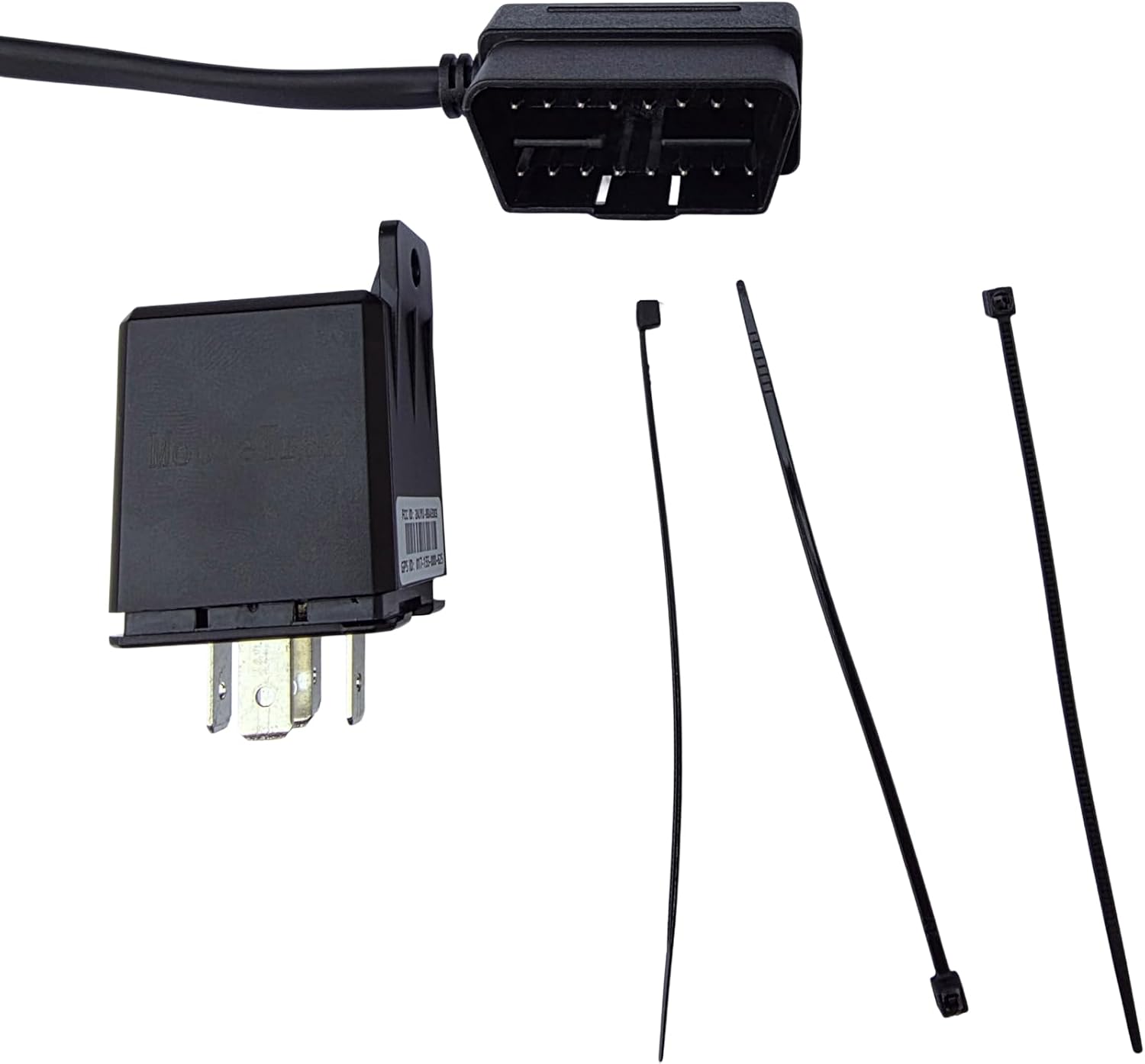
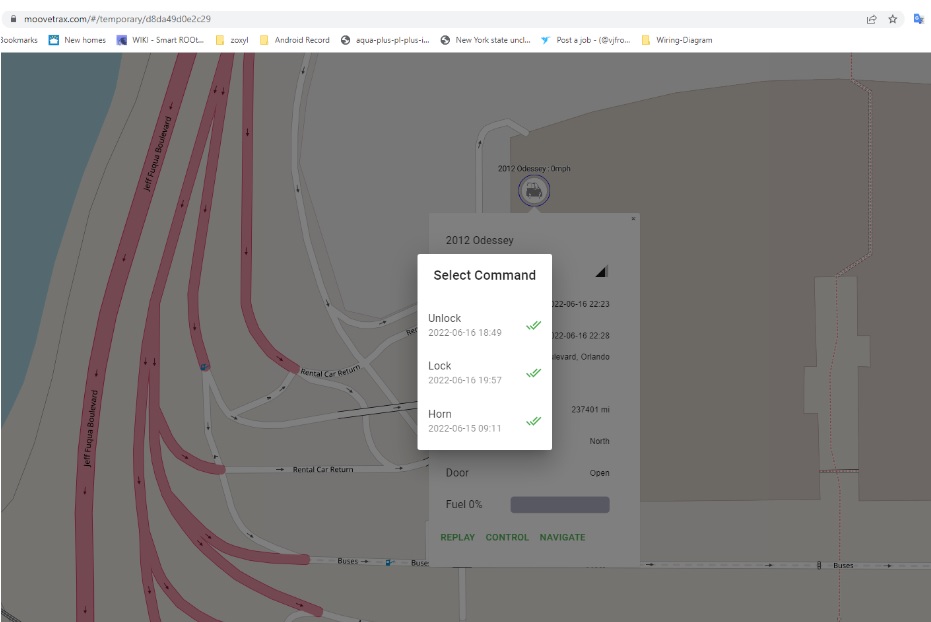
4. MooveTrax (hardwired tracker + free API). MooveTrax devices are hardwired GPS trackers with a kill switch, aimed at rental and car-sharing fleets. The API is free for account holders -- you email support@moovetrax.com with your redirect and webhook URLs and get OAuth client credentials. It covers location, lock/unlock, kill/unkill, speed limiting, odometer reads, and signed webhooks for ignition, mileage, battery, location, and geofence events. The honest caveat mirrors Bouncie's: you need MooveTrax hardware installed in the vehicle. If your users drive connected cars you don't control, Smartcar is the better fit. If you run a fleet you own and want commands plus a kill switch without metered API billing, the hardwired-device-plus-free-API model is hard to beat.
A complete example: logging mileage and geofence events
The pattern that pays off fastest for a rental operator is a webhook receiver: instead of polling for location, MooveTrax pushes events to your server. Every webhook arrives as a POST with an X-Moovetrax-Event header naming the event type (acc_on, acc_off, mileage, battery, geolocation, user_geofences) and an X-Moovetrax-Signature header carrying an HMAC-SHA256 of the body -- verify it, or anyone who finds your URL can forge events. The JSON body includes deviceId, vin, created_at, and a data object with the event payload. This handler verifies the signature, appends mileage snapshots to a CSV, and fires a notification on geofence crossings -- all real endpoint and header names from the MooveTrax documentation:
import csv, hmac, hashlib, os
from flask import Flask, request, abort

app = Flask(__name__)
SECRET = os.environ["MOOVETRAX_WEBHOOK_SECRET"].encode()
LOG_FILE = "fleet-events.csv"

def signature_valid(req):
    sent = req.headers.get("X-Moovetrax-Signature", "")
    digest = hmac.new(SECRET, req.get_data(), hashlib.sha256).hexdigest()
    return hmac.compare_digest(sent, f"sha256={digest}")

@app.post("/webhooks/moovetrax")
def moovetrax_webhook():
    if not signature_valid(request):
        abort(401)
    event = request.headers.get("X-Moovetrax-Event")
    body = request.get_json(force=True)
    vin, data = body.get("vin"), body.get("data", {})

    if event == "mileage":
        with open(LOG_FILE, "a", newline="") as f:
            csv.writer(f).writerow(
                [body.get("created_at"), vin,
                 data.get("mileage"), data.get("eventTime")])
    elif event == "user_geofences":
        notify(f"Vehicle {vin} crossed a geofence: {data}")

    return {"ok": True}, 200

def notify(message):
    print(message)  # swap for Slack, Twilio, or email
Deploy it anywhere that serves HTTPS, register the URL when you request credentials, and you have an audit trail of every mile driven -- useful for Turo mileage disputes, maintenance scheduling, and insurance documentation.
One automation that needs no telematics API at all
If you host on Turo, the highest-value automation might not involve a tracker. Turo has no public API, but every vehicle has an iCal export (host dashboard → Vehicle → Calendar → Export iCal). That feed is a standards-compliant calendar of your bookings, which means any iCal-aware tool can consume it: subscribe from Google Calendar for a free live booking view, point a cleaning scheduler at it, or parse it yourself in five lines with Python's icalendar package to trigger pre-trip checklists when a booking starts. Mind the limits: the feed is one-way and consumers typically poll it every 30-60 minutes, so it's great for scheduling and awareness, not for real-time double-booking prevention.
Which route should you pick?
Use Smartcar if your users bring their own connected cars. Use Tesla's Fleet API for a Tesla-only product that justifies metered billing. Use Bouncie for casual tracking of personal vehicles. If you operate a rental or car-share fleet and want remote commands, a kill switch, and webhooks without per-call pricing, MooveTrax's free API is the strongest fit -- provided you're willing to install the hardware. Whichever you choose, start with the webhook pattern: pushed events are cheaper, fresher, and simpler than polling on every route here.