August 4, 2026 · By MooveTrax
What Actually Stops Car Theft in Toronto and Montreal
Canada’s car-theft wave is finally receding — but it is receding from a historic high. The Équité Association counted just over 23,000 private passenger vehicles stolen nationally in the first half of 2025, a 19.1 per cent drop year over year — and the recovery rate was 56 per cent, meaning nearly half of stolen cars simply vanished, most of them into shipping containers. If you park a car in Toronto or Montreal, the risk is lower than it was in 2023. But the thieves still working are the professional ones.
What the numbers say in Toronto and Montreal
Toronto’s theft crisis peaked in 2023 at more than 12,000 stolen vehicles. Police data show roughly 9,600 thefts in 2024 and about 7,000 in 2025 — down about 25 per cent and the lowest level in four years. That is still nineteen cars a day, and the trend is fragile: Équité’s first-half 2026 report found Ontario down another 8.4 per cent while Toronto itself ticked back up.
Montreal’s story is less about where cars are stolen than where they leave the country. The Port of Montreal is Canada’s dominant exit point for stolen vehicles: border officials recovered about 1,200 there in 2023, and a single multi-force operation in early 2024 pulled nearly 600 stolen vehicles out of roughly 400 inspected containers — most of them stolen in the Toronto area. In 2024, recoveries at the ports of Montreal and Halifax reached 1,909 vehicles worth roughly $88 million. The port’s container volume and gaps in enforcement jurisdiction make it attractive to export rings — and why Ontario and Quebec numbers move together. A car stolen in Scarborough on a Monday can be in a container by Friday.
How thieves actually take a modern car
Relay attacks. Keyless-entry cars constantly listen for their fob. In a relay attack, one thief stands near your front door with a device that picks up the faint signal from the fob inside your house; a partner stands at the car with a second device that rebroadcasts it. The car believes the key is present, unlocks, and starts. No broken glass, no alarm, under a minute — and once running, the car will not shut off when the fob goes out of range.
CAN injection. Newer and nastier. Thieves pull back a bumper or wheel-arch trim to reach the wiring for a headlight, which sits on the car’s internal CAN bus network. A cheap injection device, sometimes disguised as a Bluetooth speaker, then sends forged messages that amount to “a valid key is present: unlock the doors and disable the immobilizer.” The factory immobilizer does not fail; it is politely told to stand down.
The low-tech standbys. Key theft during home break-ins, cloned keys, carjacking, and flatbed tow-aways have not gone anywhere.
The countermeasures, honestly ranked
- Faraday pouch (about $15). Blocks the fob’s radio signal, which kills the relay attack outright. Does nothing against CAN injection, stolen keys, or towing. The cheapest win available — every keyless-car owner should use one.
- Steering wheel, pedal, and OBD-port locks. Visible deterrents that push an opportunist to the next car. A professional with a cordless grinder defeats most in under a minute, but “be the slower target” is a legitimate strategy.
- Aftermarket immobilizers (IGLA-style). A hidden module that refuses to let the engine run until you enter a PIN using the car’s own steering-wheel or console buttons. Because it authenticates separately from the fob and the factory CAN messages, it defeats both relay attacks and CAN injection. Équité recommends these as part of a layered approach, and some Ontario and Quebec insurers now require one on high-theft models. Downsides: professional installation, and a PIN ritual on every drive.
- OEM fixes. Some manufacturers now ship motion-sensing fobs that sleep when idle, and offer software updates for known vulnerabilities. Worth asking your dealer — coverage is model-by-model and inconsistent.
- GPS trackers. Recovery, not prevention. But recovery is exactly what those port seizure numbers represent, and a hidden tracker is often the difference between a write-off and getting the car back.
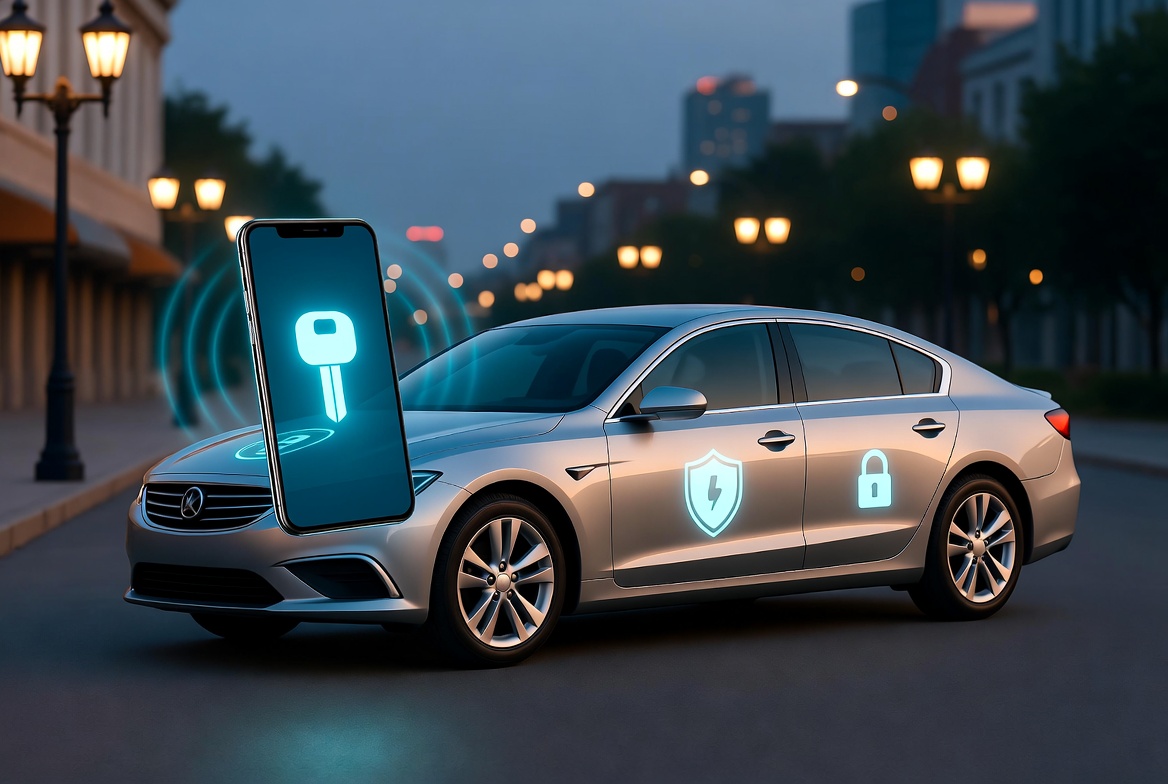
- Bluetooth phone-key kill switches. The newest category: a hardwired kill switch that arms and disarms based on whether a paired phone is physically near the car. The pitch is an immobilizer without the PIN ritual — the credential is your phone’s presence, which relay gear and CAN forgeries cannot fake.
Where MooveTrax fits — and where it doesn’t
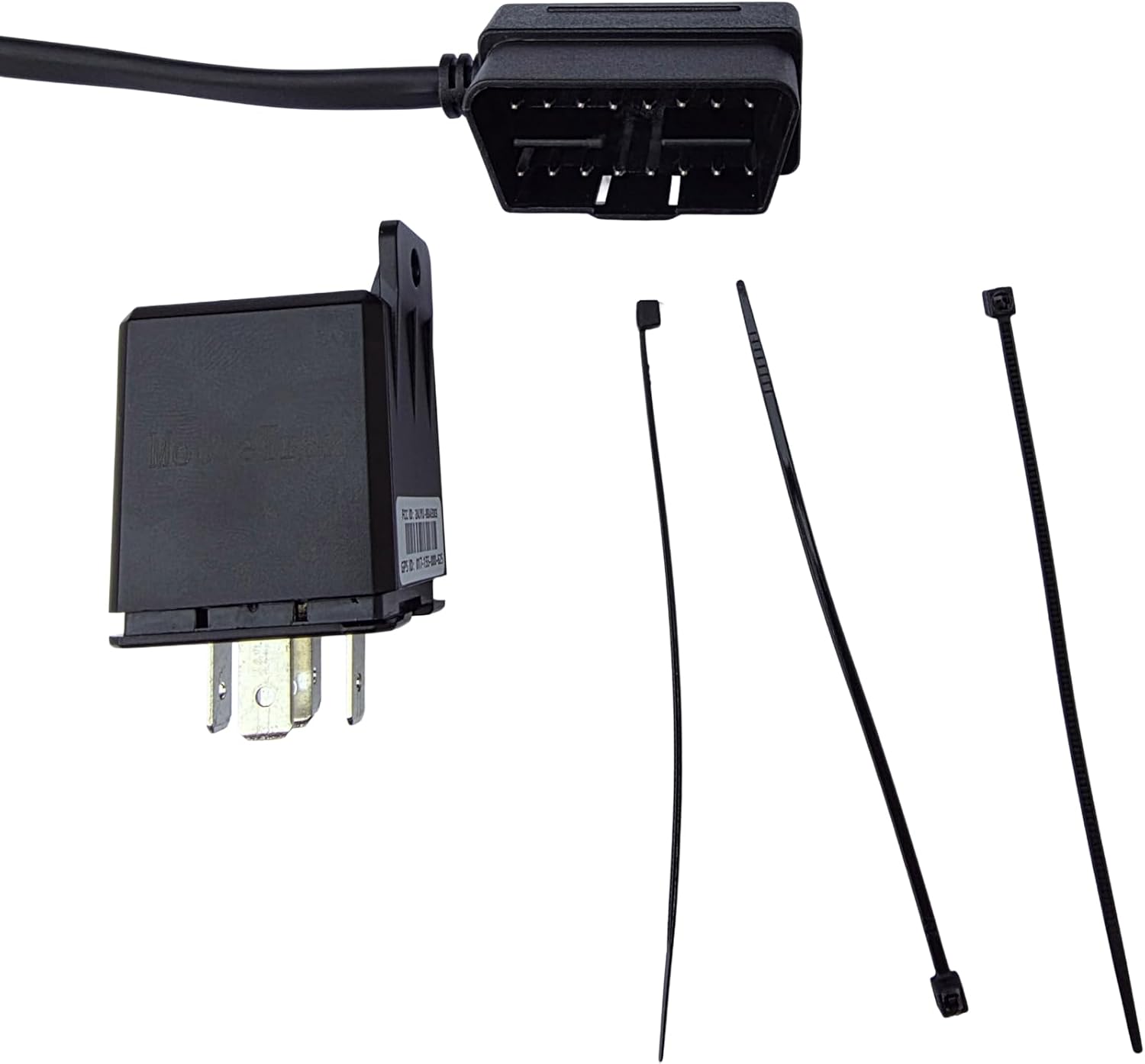
MooveTrax, built originally for Turo hosts and rental fleets, sits in that last category. Its device pairs with your phone’s standard Bluetooth — no app running in the background — and when your phone leaves an adjustable radius, the doors lock and the kill switch arms automatically. Walk back and it disarms in about two seconds. Because the handshake is local Bluetooth it works without cellular coverage, multiple devices can be authorized, and the same hardware bundles GPS tracking, geofences, hood-open detection, and possible-towing alerts (hardware from about $40 plus a monthly subscription — see current pricing).
The honest scope: a relay attack or CAN injection can still unlock the doors, but the car will not drive away — the ignition stays dead until an authorized device is nearby or a remote command is sent. It will not stop a flatbed tow (the tracker and tow alerts are the fallback there), it will not stop a smashed window, and if your phone is dead or Bluetooth is off, you are back to sending remote commands from the web portal. For how kill-switch wiring itself can be done well or badly, see our breakdown of whether a kill switch stops car theft.
The layered answer
No single device wins. The layered combination: a Faraday pouch for the fob, a visible lock to deter the opportunist, an immobilizer or presence-based kill switch so the car cannot drive away, and a tracker so you can hand police a live location before the container ships.
Frequently asked questions
Is car theft still a problem in Toronto and Montreal?
Yes, though it is improving. Toronto recorded about 7,000 thefts in 2025, down roughly 25 per cent from 2024 and well below the 2023 peak of more than 12,000 — but early 2026 data showed Toronto ticking back up. Montreal remains the main export point: 1,909 stolen vehicles were recovered at the ports of Montreal and Halifax in 2024.
Does a Faraday pouch really stop relay attacks?
Yes — used consistently, it blocks the fob signal relay thieves amplify. But it only addresses relay theft. It does nothing against CAN injection, stolen or cloned keys, or towing, so pair it with a layer that immobilizes the car.
What is CAN injection and can anything stop it?
Thieves reach wiring behind a headlight or bumper and inject forged “valid key” messages into the CAN bus, unlocking the doors and disabling the factory immobilizer. Devices that authenticate outside the factory system — PIN immobilizers or presence-based kill switches — stop the drive-away, though not the trim damage.
Are steering wheel locks still worth using?
As a visible deterrent, yes; as a last line of defense, no. Professionals cut them quickly. Use one to redirect opportunists, and rely on an immobilizer or kill switch to stop the actual drive-away.
What happens to a Bluetooth phone-key kill switch if my phone dies?
Passive unlock and disarm stop working until Bluetooth is back. With MooveTrax you can still send lock, unlock, kill, and unkill commands from the web portal over cellular, and any other authorized Bluetooth device — a second phone, a tablet, even an older phone — can serve as a backup key.