November 1, 2026 · By MooveTrax
What Tesla's Fleet API Lets Third-Party Apps Actually Do (And What It Doesn't)
If you host a Tesla on Turo, you've probably noticed that it needs no aftermarket GPS tracker to be trackable. Every Tesla ships with a built-in cellular connection, and Tesla's official Fleet API lets approved third-party apps tap into it. That's genuinely useful -- and genuinely limited. Here's what the API actually does, straight from Tesla's developer documentation, and where it stops short of what a rental operation needs.
What the Fleet API lets third parties do
Once you authorize an app through Tesla's third-party access flow (and pair its virtual key with your car), the app can issue a real set of commands and read a real set of data:
- Lock and unlock -- the core of contactless Turo handoffs
- Location and telemetry -- GPS position, speed, and odometer, including streamed data via Fleet Telemetry while the car is driving
- Charge state and control -- battery percentage, charging status, start/stop charging, set charge limits and schedules
- Climate -- precondition the cabin, set temperatures, run seat and steering-wheel heaters before a guest pickup
- Guest restrictions -- Speed Limit Mode (PIN-protected, 50-120 mph), valet mode, PIN to Drive, Sentry Mode, and guest mode
- Remote start -- enable keyless driving for a set window
For a host, that covers the daily workflow: confirm the car is where it should be, confirm it's charged, unlock it for the guest, lock it after dropoff.
What it explicitly does not do
Here's the part most "Tesla fleet software" marketing skips: there is no immobilization command in the Fleet API. Scan Tesla's full vehicle-command list and you'll find nothing that disables the car, cuts power, or prevents it from being driven. The closest tools are Speed Limit Mode (which caps speed but can't go below 50 mph), valet mode, and revoking keys -- and none of them stop a car that's already moving or a renter who's holding the key card.
Locking the doors isn't immobilizing, either. Anyone with a paired phone key or key card drives off regardless of lock state.
Two more limits matter in practice:
- Sleep and dead zones. A sleeping Tesla returns an offline error to commands; apps must send a wake-up first, which adds anywhere from seconds to a minute. A car parked in an underground garage with no LTE takes no commands at all.
- Tesla controls the pipe. Fleet API access now runs on pay-per-use pricing (fractions of a cent per command, two cents per wake-up), and Tesla can change terms, rate limits, or access rules at any time -- Ford and GM owners learned this year how quickly OEM API doors can close.
API-only vs. hardware telematics: the honest tradeoffs
Pure API control is software: nothing to install, nothing to wire, no device to hide. For a leased Tesla, or a host who doesn't want to touch a 12V system, that's a real advantage. The latency and reliability profile is different from hardware, though. An installed GPS unit with its own cellular modem reports on a fixed interval (MooveTrax's hardware pings every 30 seconds) whether or not the car's own computer is awake, and it keeps working if your Tesla account access is ever interrupted.
The bigger gap is the kill switch. A hardwired immobilizer physically interrupts a circuit -- the car cannot be started once it's parked, full stop. That's not a feature an API token can replicate, because Tesla simply doesn't expose it. If a guest goes dark past their return date, API-based tools can track, lock, and cap speed; only hardware can keep the car from starting again. Many hosts run both: API for convenience commands, hardware for the scenario insurance adjusters ask about.
Do other automakers offer anything comparable?
Tesla's self-serve developer program is currently the exception, not the rule. Ford ran a FordConnect API program but has stopped issuing credentials to individual developers. GM wound down third-party data sharing after its FTC settlement over the Smart Driver program. Rivian has no public developer API; its telematics flow to commercial fleets through partners like Geotab. For everyone else, access runs through aggregators -- Smartcar (which powers Turo Go across 30+ brands) and Motorq normalize OEM data behind one API, typically limited to location, lock/unlock, and odometer.
Where MooveTrax fits
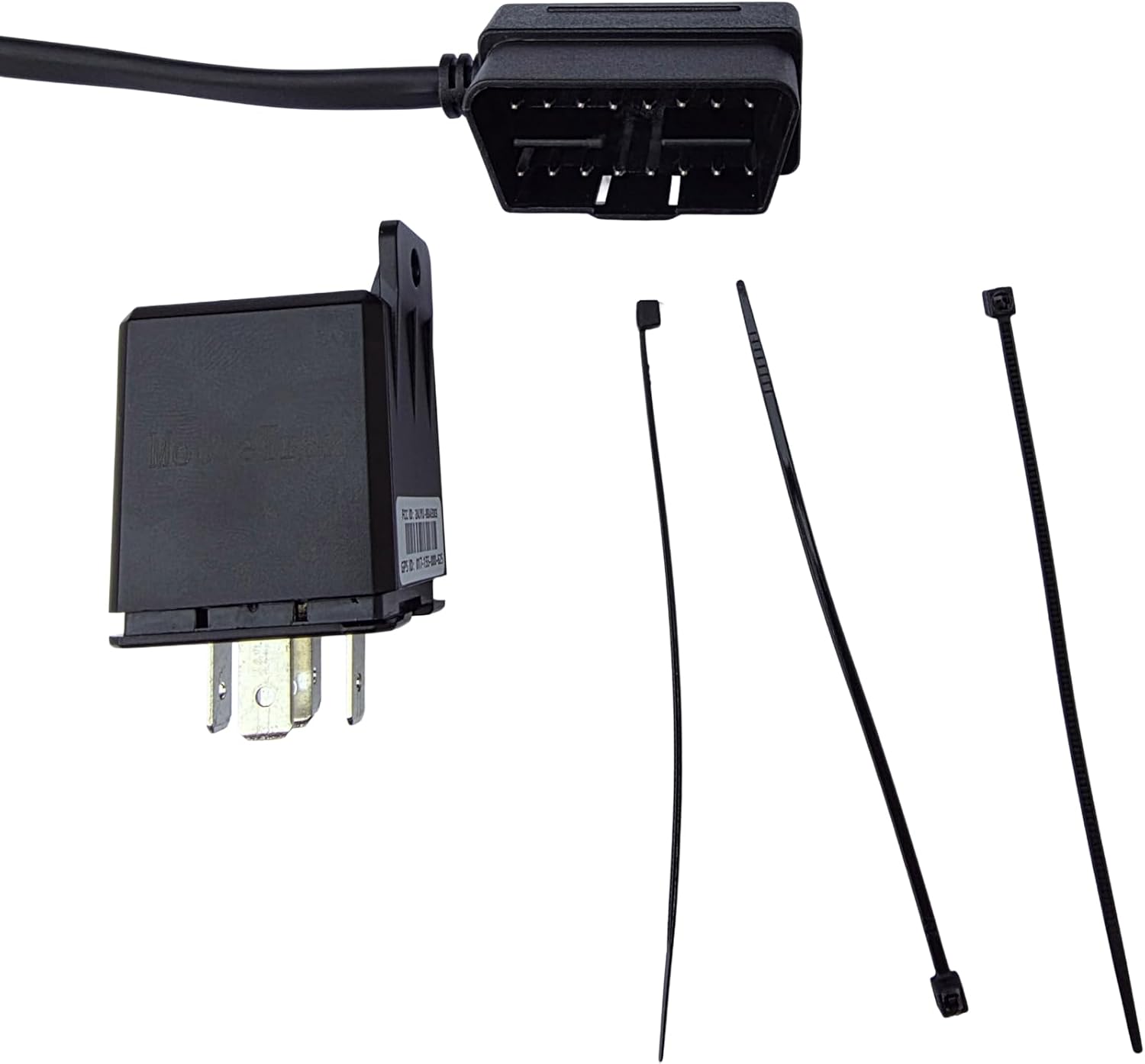
MooveTrax added a Tesla integration built on this same Fleet API, priced for hosts: $0 hardware and $10/month for remote lock, unlock, and location tracking alongside non-Tesla vehicles in one dashboard. For the capability the API can't provide, the hardware line fills the gap: the KS unit ($40 + $12.50/mo) adds a true kill switch, and the MT3V ($165 + $15/mo) adds Bluetooth lock/unlock and 30-second GPS on top. Know what the API gives you for free, and pay for hardware only where software can't reach.